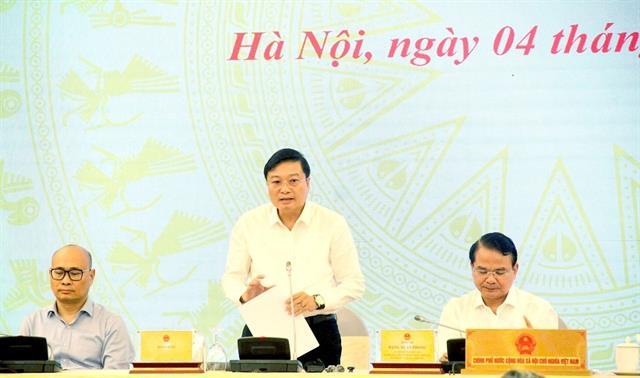





Speaking at the Government’s regular press briefing on Wednesday, Deputy Minister of Construction Lê Hồng Vinh said 293 social housing projects, comprising 363,065 units, are currently under development nationwide.
At a seminar held on October 24, economists examined how economic models and monetary policy lessons could be applied to Việt Nam’s development challenges.
The annual tax and customs dialogue, held regularly since 2008, had provided an important channel for businesses to raise concerns and discuss practical solutions with regulators with policy discussions translated into concrete measures.
The challenge is not simply to reduce the tax burden, but to ensure that businesses turn the resources released into investment, innovation, jobs and higher productivity
Taxation is not simply an expense for long-term investors who also need clear policies, predictable obligations and consistent implementation, as well as mechanisms for dialogue and resolving problems.
Tax and fee relief measures have had a noticeable impact on businesses, particularly amid pressures from input costs, capital, markets, competition and the need to transform growth models.
After two decades of development, the corridor needs a new approach, moving from simply “having cooperation” to jointly creating tangible value and shared benefits for all.
Achieving greater energy independence is becoming increasingly important for Vietnamese businesses as electrification, digital transformation and the global transition towards low-carbon development reshape manufacturing, supply chains and international trade.
Double-digit growth should be seen not merely as a target for economic scale or speed, but as a shift in institutional quality, productivity, technological capacity and business competitiveness.
The Ministry of Finance plans to maintain tax incentives and other fiscal support measures as it seeks to sustain economic growth despite global uncertainties and a widening trade deficit.
Under a draft amendment to the Law on Housing 2023 now open for public consultation, social housing owners would only be permitted to resell to buyers who meet the eligibility criteria for social housing support.
In the coming period, the SBV will adjust interest rate policy in line with macroeconomic conditions and inflation trends, and require credit institutions to publicly disclose lending rates to improve transparency.
The directive requires ministries and local authorities to monitor post-Tết price fluctuations, particularly for essential consumer goods and key production inputs.
Close coordination and mutual support between monetary policy, fiscal policy and other macroeconomic policies are necessary to maximise effectiveness and achieve the goals of maintaining macroeconomic stability, controlling inflation, promoting growth and ensuring economic balance.